Students Supporting Students: Inside SLO High School’s Growing Peer Support Program
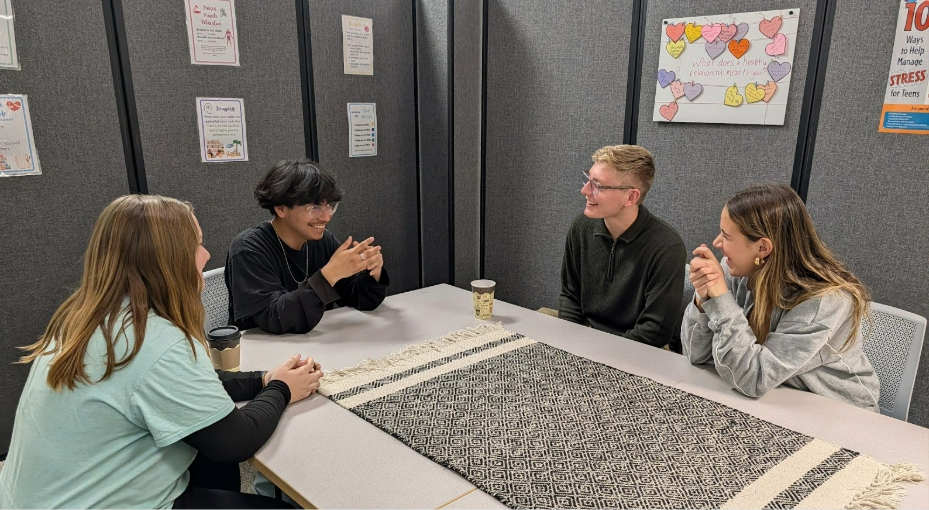
We recently visited San Luis Obispo High School to observe a groundbreaking and impactful approach students are taking to better utilize the school’s Wellness Center. At the heart of SLO High’s new approach is a peer support program led not by adults, but by students themselves.
They call themselves Wellness Center Aides, seniors nominated by teachers or classmates for their kindness, empathy, and trustworthiness. Their role is formalized through a class period called Peer Helping, but their impact extends far beyond a block in a schedule.
“When I was a freshman, there was nothing like this,” said Brenda, a senior Wellness Center Aide. “This gives people a chance to express things they might not be able to anywhere else.”
Built by Students, for Students
The program grew out of a clear need identified by students themselves. After SLO High lost the aide staffed for its Wellness Center, members of the Student Senate began asking hard questions.
“What do I do if I have a problem and don’t want to talk to a teacher?” recalled Ariel, a Student Senate member and aide. “What if the teacher is the problem?”
That question became the genesis of the peer support model. Student leaders studied similar programs and partnered with school administrators to build a system that felt authentic to student needs. Findings from the Youth Truth survey reinforced their instincts; many students reported feeling disconnected from school, a trend amplified by the disruptions of COVID-era distance learning.
Wellness center counselor Austin Miller, who spearheaded the program’s development, sees it as part of a broader effort to ease transitions and build belonging.
“Students are on trimesters here, but almost all new students are coming from semesters and have a hard time transitioning,” Miller explained. “As part of this program, we’re working on a group, Tiger Connections, to catch and support those students, with available resources and guidance.”
Training for Real Conversations
Wellness Center Aides undergo extensive training and meet regularly during the school year and over the summer. Community partners like Transitions Mental Health Association (TMHA) provide instruction on identifying stress and anxiety, recognizing physical and emotional warning signs, and knowing when a concern is urgent.
Training also emphasizes self-awareness and self-care. Aides are encouraged to check in with one another after difficult conversations and to recognize their own limits.
“Taking care of ourselves is part of the training,” Erin said. “If something heavy happens, we lean on each other.”

How the Wellness Center Works
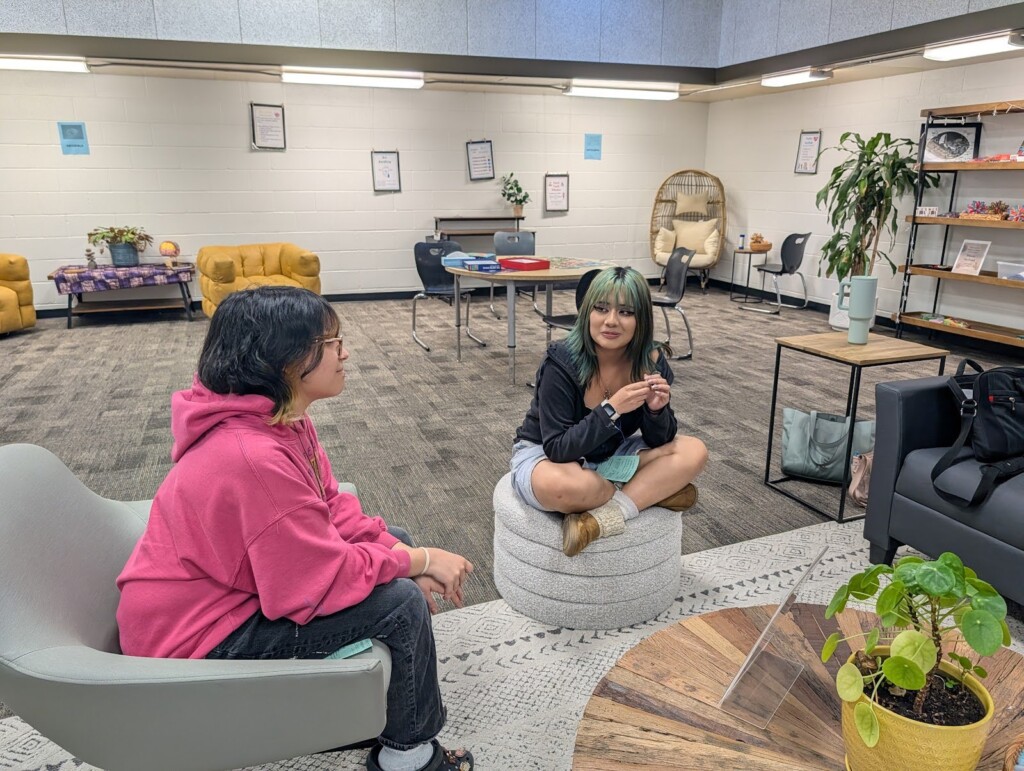
Students can visit the Wellness Center throughout the school day. After signing in, they’re asked whether they’d like to talk with a peer aide or an adult. Phones go into a basket, creating space for real connection.
Students are given about 15 minutes to decompress—whether that means sitting quietly, sipping tea, or watching calming visuals. If they’re ready, they return to class with a signed pass. If not, aides listen, offer resources, or connect them with counselors and staff.
While the center isn’t meant to replace class time or serve as a hangout, its flexibility is part of what makes it effective.
Why Peer Support Matters
For many students, talking to someone their own age makes all the difference.
“Kids understand me and relate to me, and we’re going through the same challenges.,” Lilian said. “They feel more understood than with adults.”
Confidentiality is key.
“Knowing the confidentiality is there has been huge,” said Eric. “Someone who speaks your language and won’t speak it to anyone else.”
Building that trust doesn’t come easily. Both Brenda and Lilian acknowledged that getting students to open up can be the most challenging part of the job.
“People don’t want to appear vulnerable,” Lilian said. “We have to tell them and model for them that it’s not a sign of weakness.”

Growing Confidence, Shaping Futures
While the program supports students who visit the Wellness Center, it also transforms the aides themselves.
“I’ve become more confident,” Lilian shared. “I’m more comfortable speaking up, asking questions, even talking to adults.”
Several aides say the experience has influenced their future plans. Brenda is considering humanities studies at Cuesta and hopes to work alongside her sister in addiction counseling. Erin plans to major in psychology. Others are interested in pursuing different fields but want to carry these skills with them.
Students are learning that sometimes the most meaningful support comes not from having all the answers, but from showing up for one another.